 ENG
 INA
Udayana University Joins High-Level FGD on Sustainable Housing Challenges University General University General
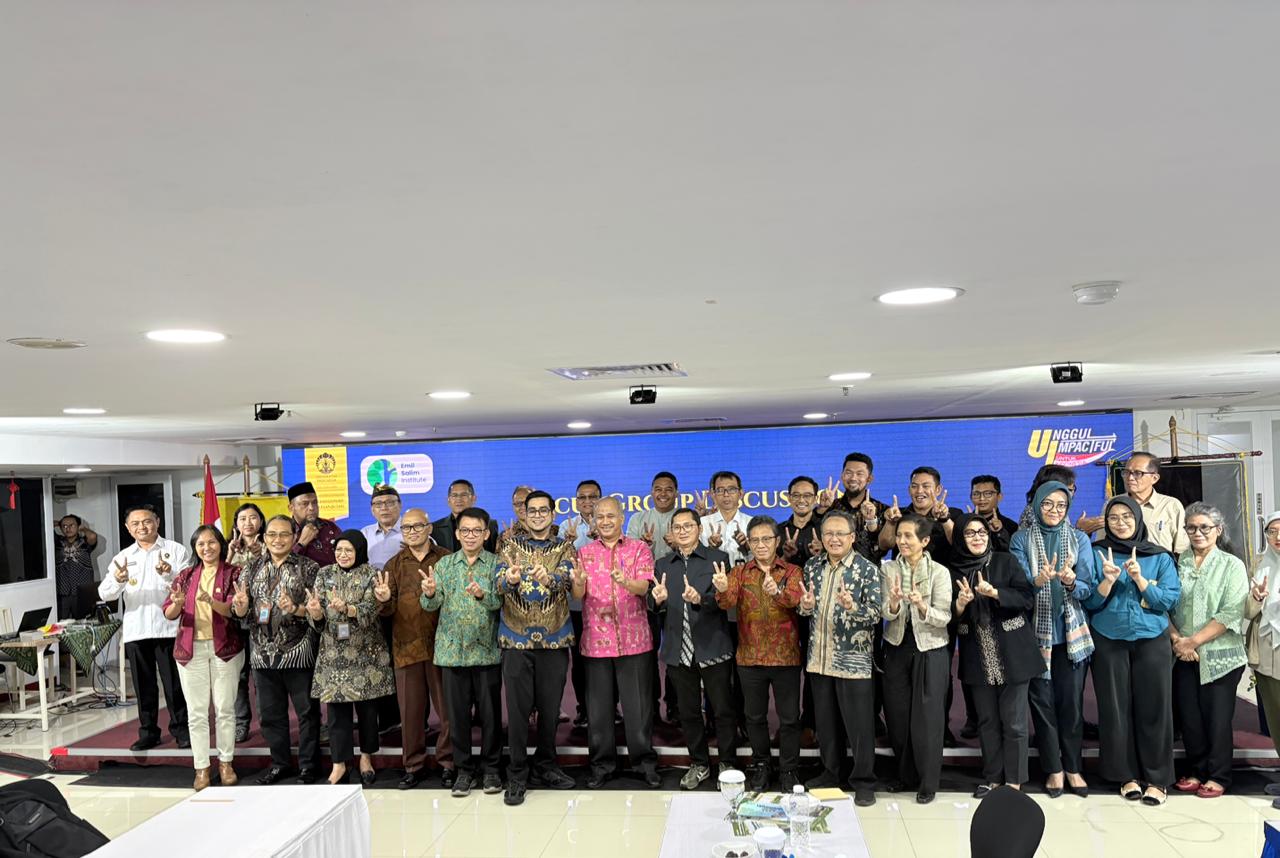
Jakarta, 26 February, 2026, the Head of the Master’s Program in Environmental Science, Postgraduate, Universitas Udayana Ni Made Utami Dwipayanti, ST, M.BEnv., PhD, recently attended a prestigious Focus Group Discussion (FGD) centered on the theme "Housing, Urban Areas, and Sustainable Development Challenges". Held at the Universitas Indonesia Salemba Campus, the event brought together academic leaders, government officials, and environmental experts to address the critical tension between rapid infrastructure growth and environmental preservation. The session opened with a powerful address from Prof. Emil Salim, a pioneer of the sustainable development concept in Indonesia and founder of the Emil Salim Institute (ESI). Prof. Salim expressed concern that sustainable development has often become a mere "slogan" rather than a practical reality.He highlighted how recent natural disasters, such as massive floods in Sumatra, have resulted in economic losses reaching tens of trillions of rupiah, proving that ignoring environmental factors in development eventually erodes economic growth.
A core focus of the discussion was the Indonesian government’s ambitious target to build 3 million houses. The FGD explored the complex "trilemma" facing this program; Land Scarcity & Cost, High land prices in urban centers make affordable housing difficult to centralize; Urban Relocation Challenges, While land is cheaper outside the city, urban inhabitants are often reluctant to relocate far from their livelihoods; and Environmental Risks, There is a critical need to ensure new settlements are not built in "red zones" or disaster-prone areas, which has historically led to high safety risks for residents. Beyond housing, the participants discussed the urgent need for integrated waste management and the evaluation of spatial planning (RTRW). Experts noted that converting fertile rice fields and green forests into residential areas threatens national food security and ecological balance. The discussion also touched upon the necessity of adapting society to vertical housing (apartments) to maximize land efficiency in densely populated areas.
The insights gathered from this FGD will be formulated into a Policy Brief to be submitted to the President of Indonesia. By participating in this national dialogue, Universitas Udayana continues to play a vital role in ensuring that Indonesia's path toward becoming a developed nation remains environmentally sound and socially inclusive.
"The goal is to provide a strategic solution that ensures every citizen's right to a healthy living environment is met without compromising the safety of future generations."
UDAYANA UNIVERSITY